PROJECT ASHABI
African Stories. Limitless Worlds.
PROJECT ASHABI
African Stories. Limitless Worlds.
Project Gutenberg Archive
Complete unabridged public-domain literary work from the Project Gutenberg archive.
Project Ashabi is being built as the home of original African comics, webtoons, graphic novels, and fiction.
This third-party Novel / Book title is temporary preview content. Step by step, third-party titles will be phased out and replaced exclusively by Ashabi Originals created by African writers and artists.
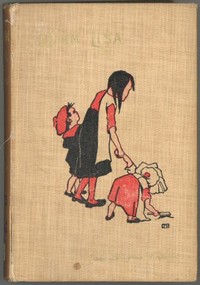
Transcribed from the 1905 Gay and Bird edition by David Price, email ccx074@pglaf.org
The eternal-womanly Ever leadeth us on. GOETHE’S _Faust_.
GAY AND BIRD 22 BEDFORD STREET, STRAND LONDON 1905
Edinburgh: T. and A. CONSTABLE, Printers to His Majesty
PAGE I. EDEN PLACE 1 II. MISTRESS MARY’S GARDEN 16 III. A FAMILY POLYGON 29 IV. MARM LISA IS TRANSPLANTED 46 V. HOW THE NEW PLANT GREW 59 VI. FROM GRUBB TO BUTTERFLY 77 VII. THE COMET AND THE FIXED STAR 88 VIII. THE YOUNG MINISTER’S PSYCHOLOGICAL OBSERVATIONS 106 IX. MARM LISA’S QUEST 121 X. THE TWINS JOIN THE CELESTIALS 135 XI. RHODA FREES HER MIND 150 XII. FLOTSAM AND JETSAM 167 XIII. LEAVES FROM MISTRESS MARY’S GARDEN 186 XIV. MORE LEAVES 202 XV. ‘THE FEAST O’ THE BABE’ 219 XVI. CLEANSING FIRES 231
EDEN PLACE was a short street running at right angles with Eden Square, a most unattractive and infertile triangle of ground in a most unattractive but respectable quarter of a large city. It was called a square, not so much, probably, because it was triangular in shape, as because it was hardly large enough to be designated as a park. As to its being called ‘Eden,’ the origin of that qualifying word is enveloped in mystery; but it is likely that the enthusiastic persons who projected it saw visions and dreamed dreams of green benches under umbrageous trees, of a green wire fence, ever green, and of plots of blossoming flowers filling the grateful air with unaccustomed fragrance.
As a matter of fact, the trees had always been stunted and stubby, the plants had never been tended, and all the paint had been worn off the benches by successive groups of working-men out of work. As for the wire fence, it had been much used as a means of ingress and egress by the children of the neighbourhood, who preferred it to any of the gateways, which they considered hopelessly unimaginative and commonplace, offering no resistance to the budding man of valour or woman of ambition.
Eden Place was frequented mostly by the children, who found it an admirable spot to squabble, to fight, and to dig up the hapless earth; and after them, by persons out of suits with fortune. These (generally men) adorned the shabby benches at all times, sleeping, smoking, reading newspapers, or tracing uncertain patterns in the gravel with a stick,—patterns as uncertain and aimless as themselves. There were fewer women, because the unemployed woman of this class has an old-fashioned habit, or instinct, of seeking work by direct assault; the method of the male being rather to sit on a bench and discuss the obstacles, the injustices, and the unendurable insults heaped by a plutocratic government in the path of the honest son of toil.

Arthur Conan Doyle